


ESG - ENDOSCOPIC SLEEVE GASTROPLASTY
Lose 49-60% of excess body weight with Endoscopic Sleeve surgery Kenya
Endoscopic Sleeve Gastroplasty (ESG) surgery in Kenya is a minimally invasive weight-loss procedure that uses internal stomach stitches to make the stomach smaller, helping an average person lose about 49-60% of their excess body weight.
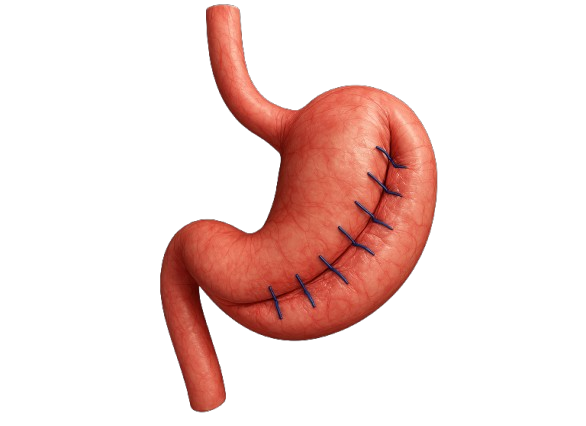
- No external incisions; fully endoscopic.
- Procedure time: 1–1.5 hours under anesthesia
- No hospital stay.
- Endoscope inserted through the throat for stitching.
- 5–8 sutures reduce stomach size by 70%.

Who is considered as an eligible candidate for ESG Surgery?
Endoscopic Sleeve Gastroplasty is recommended for individuals who meet certain criteria. These may include:
- Body Mass Index (BMI) of 30 or higher, indicating obesity (class I or higher)
- BMI of 27 or higher may qualify if accompanied by obesity-related health conditions such as diabetes, high blood pressure, sleep apnea, heart disease, cholesterol, etc.
- Patients who can’t undergo bariatric surgeries having a BMI below 35
- Patients with BMI of over 60 with anesthesia risk, and need to lose weight before planned bariatric surgery
- Previous unsuccessful attempts at weight loss through diet, exercise, and other nonsurgical methods
- Past medical and surgical history may also affect eligibility, so it is important to come in for a consult beforehand
Benefits
- Less invasive
- Shorter recovery time and hospital stay
- Effective weight loss with improvement in obesity- related health conditions
Disadvantages
- Potential for complications such as bleeding, infection, or injury during the procedure
- Risk of gastroesophageal reflux disease (GERD) worsening or developing
Side effects
only first few days after the procedure- Nausea and vomiting (20-30%)
- Abdominal pain and discomfort (10-20%)
- Gastroesophageal reflux (10-15%)
- Diarrhea (5-10%)
Complications
- Bleeding (< 1% )
- Infection (< 1%)
- Peroration or injury to nearby organs (< 1%)
- Development of strictures or narrowing of the stomach (< 1%)
How does it Work?
The endoscopic stomach-sewing procedure, performed without the need for any external incisions, represents a significant advancement in minimally invasive bariatric interventions. Conducted under anesthesia, the procedure typically lasts between 1 to 1.5 hours, with patients requiring only a short hospital stay of about 1 day. Through the insertion of an endoscope, equipped with a camera and a suturing device, into the stomach via the throat, the surgeon marks the orientation of the stomach to guide the procedure. Subsequently, 5 to 8 sutures are tightly placed to reduce the horizontal diameter and vertically shorten the length of the stomach from within, resulting in a remarkable 70% reduction in its volume.
The endoscopic stomach-sewing procedure, performed without the need for any external incisions, represents a significant advancement in minimally invasive bariatric interventions. Conducted under anesthesia, the procedure typically lasts between 1 to 1.5 hours, with patients requiring only a short hospital stay of about 1 day.
Through the insertion of an endoscope, equipped with a camera and a suturing device, into the stomach via the throat, the surgeon marks the orientation of the stomach to guide the procedure. Subsequently, 5 to 8 sutures are tightly placed to reduce the horizontal diameter and vertically shorten the length of the stomach from within, resulting in a remarkable 70% reduction in its volume.
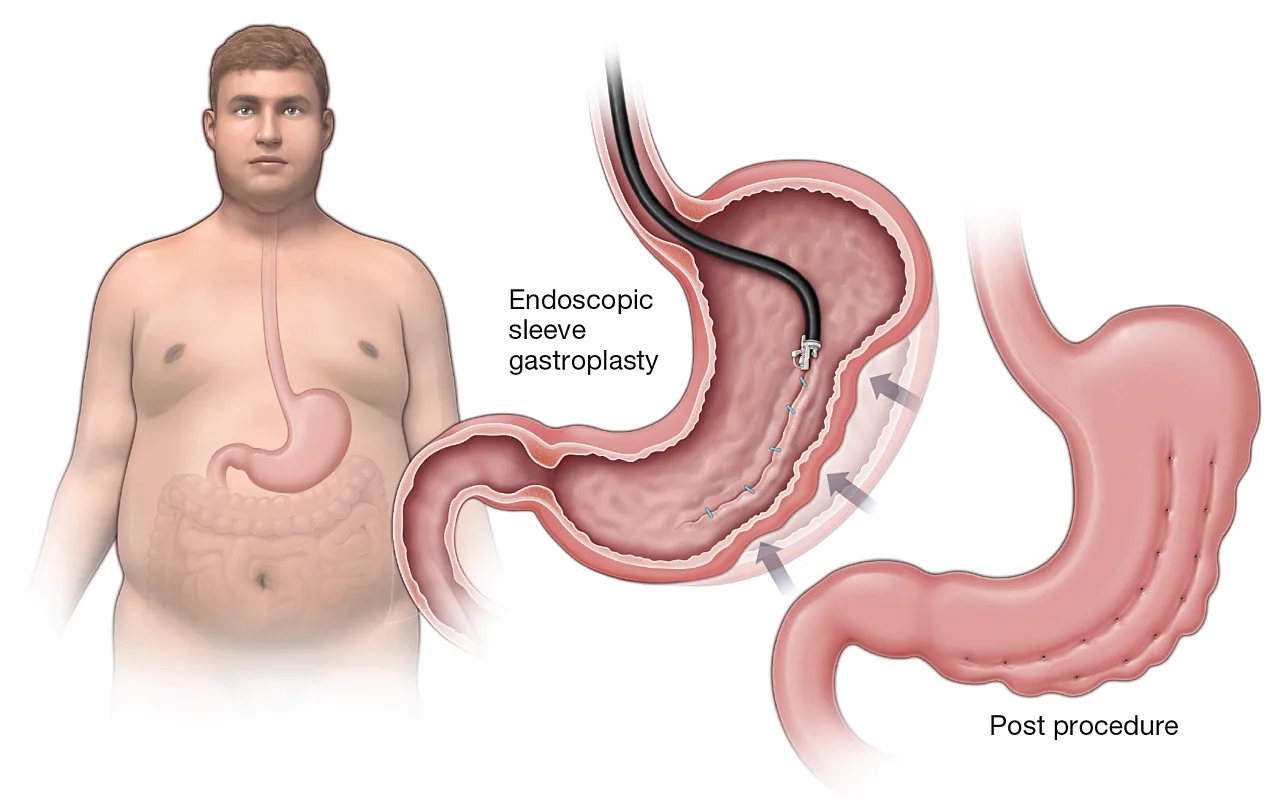
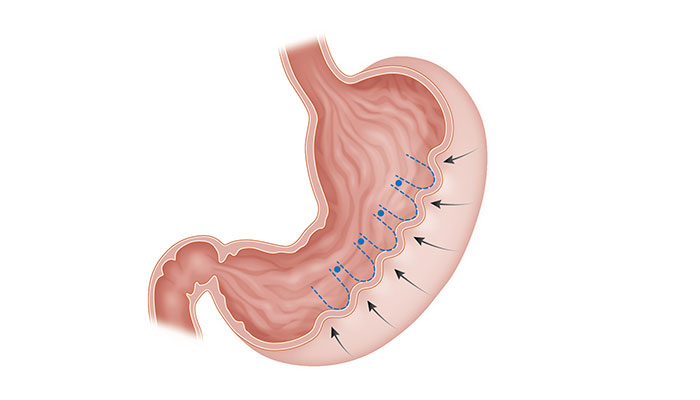
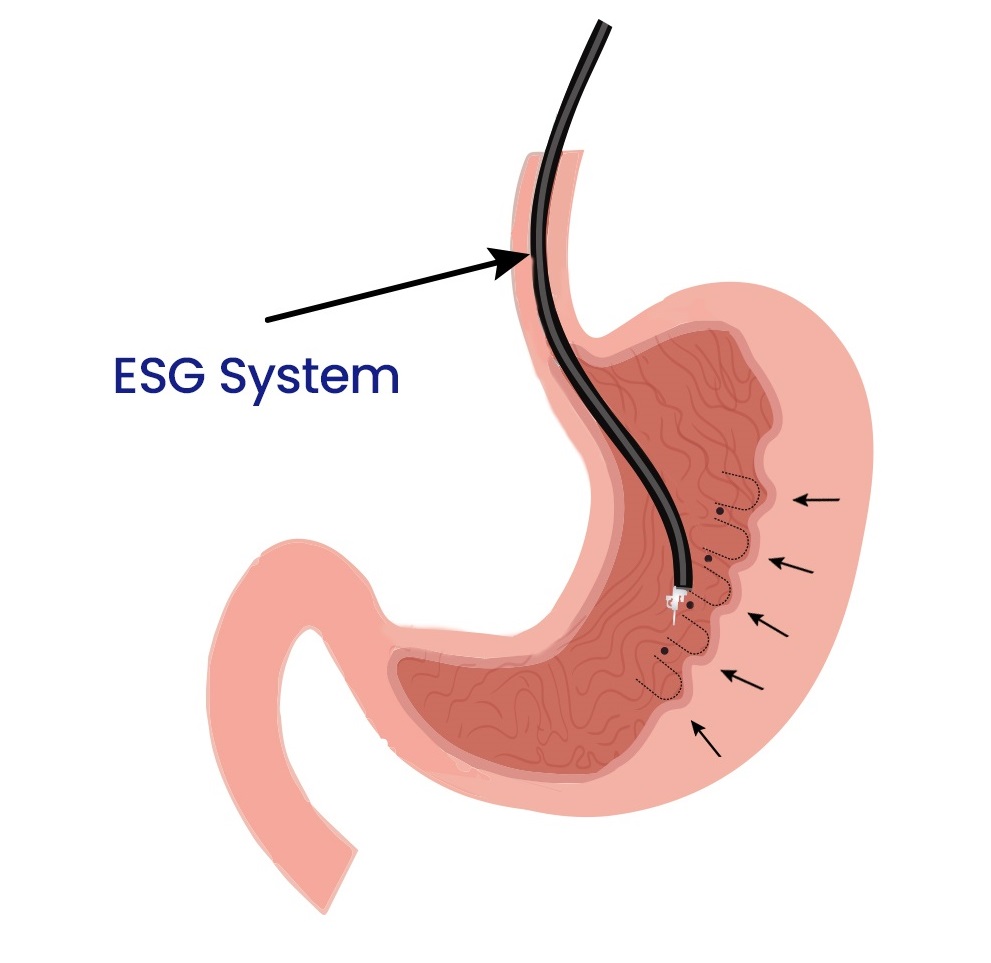
SLEEVE GASTROPLASTY (ENDOSCOPIC) Vs GASTRIC SLEEVE (LAPAROSCOPIC)
The endoscopic sleeve gastroplasty, a minimally invasive procedure, typically leads to around 15% weight loss, which is less effective compared to the more invasive laparoscopic sleeve gastrectomy, which can result in up to a 35% weight reduction. One advantage of the endoscopic method is its reversibility – the sutures used to reduce stomach size can loosen over time, allowing the stomach to return to its original shape and size based on eating habits. This approach is considered safer and less invasive than traditional bariatric surgery, as it doesn't alter the natural digestion process.


FAQs
ESG (Endoscopic Sleeve Gastroplasty) is a minimally invasive weight-loss procedure that reduces the size of the stomach using an endoscope and internal sutures, without external incisions.
A flexible endoscope is passed through the mouth into the stomach, where the doctor places sutures to reshape and reduce the size of the stomach.
The procedure typically takes around 60–90 minutes, depending on the patient and the technique used.
ESG is performed under anesthesia or deep sedation, so patients do not feel the procedure. Some discomfort, nausea, or abdominal pain may occur afterward.
Results vary, but patients may lose approximately 15–20% of their total body weight over the first year when ESG is combined with healthy lifestyle changes.
ESG is generally considered potentially reversible, although reversing the stomach’s shape requires another endoscopic procedure and may not completely restore the original anatomy.
Many patients can return to light activities within a few days, although recovery time varies depending on individual circumstances.
ESG is generally considered safe, but possible complications include bleeding, infection, abdominal pain, nausea, vomiting, and, rarely, more serious complications.
ESG may be suitable for adults with obesity who have not achieved sufficient weight loss through diet and lifestyle changes alone. Eligibility is determined by a medical team.
Yes. Patients typically progress from liquids to soft foods and then regular foods over several weeks while following a structured nutrition and lifestyle program.